Include these in the body of a dot phrase (SmartPhrase) to pull in results automatically from a patient’s chart. Writing a note in this way is much faster than clicking through a chart to get to know what’s going on with a patient.
Histories:
Past medical history: @PMH@
Social history: @PSH@ or @SOCH@
Family history: @FAMHX@
Allergies: @ALLERGY@
Medications: @MED@
Objective:
Vitals: @VS@ or @VITALS3@
@BRIEFLAB@(WBC,RBC,HGB,HCT,PLT)@ (other arguments you can put in the list are: NA,K,CL,CO2,BUN,CREATININE,GLUCOSE,CA,PROTIME,INR,PTT
“Welcome, Doctor!” Dr. J. Lawton Smith (1929–2011) was one of the most famous neuro-ophthalmologists to ever live. He had a distinguished career at Bascom Palmer Eye Institute, one of the most famous eye hospitals in the world (affiliated with University of Miami). In the 1970s, he recorded a series of lectures on neuro-ophthalmology on reel-to-reel tapes. The goal of these recordings was to help residents learn about neuro-ophthalmology while they were commuting or otherwise free to listen — the original podcast. These lectures in full can be listened to at the following link. While they are a little bit dated, a lot of the concepts are still valid, and they are highly educational and entertaining:
Dr. Tim Root, who runs the excellent https://timroot.com/ site and published the highly-recommended and very funny OphthoBook, was a big fan of Dr. Smith and has put many people onto his lectures.
Dr. Smith was a religious man who care deeply for his patients, which becomes clear from listening to his tapes. He was from a rural area of South Carolina, and he was famous for peppering his podcasts and teaching with lots of “down home” and entertaining expressions from his hometown, like “rare as hen’s teeth,” “enough [of some eye drop] to float the Queen Mary,” and “happier than a dead hog in the sun.” Many of these expressions are listed in the glossary section at the end of this tribute to the great man, which is well worth a read if you want to know what an “Acey case,” “Walletectomy,” “Subaquatic workup,” or “serum rhubarb” is all about:
Please find some of my favorite phrases from his lectures here as a soundboard, to help commemorate the great doctor.
Tell me when it hits the sweet spotWhoo-weeRare as hen’s teethBig beef steak (crocodile tears)Now don’t get too hungry!More hypermetropia than you can shake a stick atMmm-mmm!Mmm-mmm! Nom de plume, gimme that thing!Gimme that thing!Gimme dat cyl!
It’s a waste of time to call Comcast. You probably won’t get any discounts for your loyalty. These days, even threatening to cancel while on the line with one of their “retention specialists” may not get you a deal, and if it does, it’s unlikely to be a good one. Besides, phone calls to Comcast often take forever, and you have better things to do with your time.
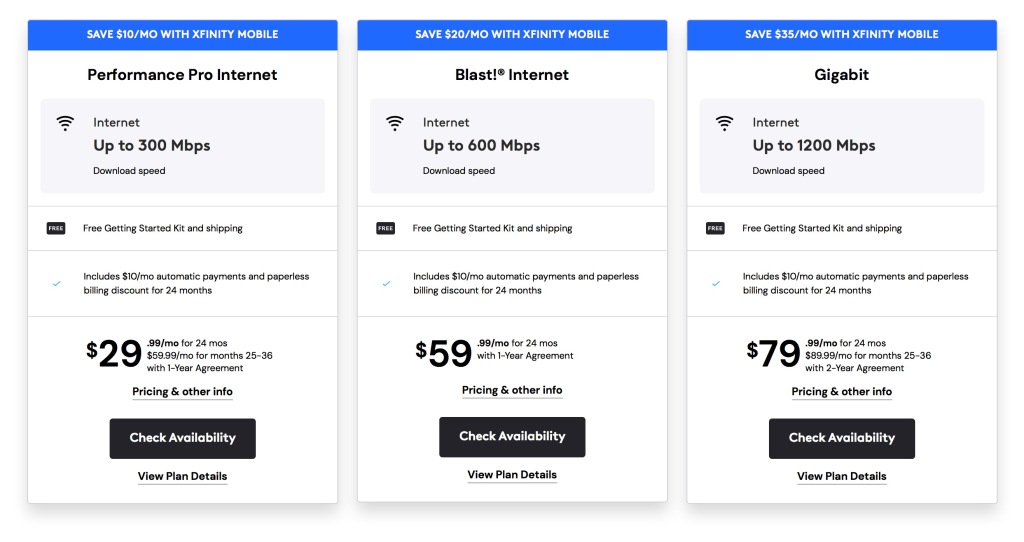
If you want a good deal, you need a new customer special. One of these:
Just go to xfinity.com, sign up as a new customer using your roommate’s/spouse’s name (or maybe your dog or alias idk), skip past all of the other stuff they want you to sign up for, and that’s all. Comcast will automatically put in a cancellation for the existing account at your address and email them to that effect. You then just download the Xfinity app on your phone, go through the activation process (put in the MAC number on your router), and you’ll have internet access in about 5 minutes.
Do this once a year or whenever your “New Customer” pricing runs out. Simple, and no phone call involved.
You can go back-and-forth between your name and whoever you live with multiple times (see this Reddit post).
I’m mid-clerkship, and here’s what I found helpful so far:
Podcasts.
Pediatric Emergency Playbook. PEMPlaybook.org Your best bet. This is a great podcast by UCLA-based Tim Horeczko, MD. He digs into topics for about 1 h at a time. It’s pretty engaging, and brings in cases, the latest research, and lots of clinical pearls. Many of the topics are high-yield, such as diarrhea, syndromes, otitis media, and strep throat.
Peds in a Pod. This one is by a few fun residents and some attendings. They are making it to review for the pediatrics boards. The episodes vary in length and quality, and are generally pretty good.
Peds Cases. More variable in quality. PedsCases.com. Mostly pretty short.
Books
I’m using BRS Pediatrics as more of a textbook, and I like Pre-Test Pediatrics and Case Files: Pediatrics for lots of questions and for cases followed by questions, respectively.
Special things to bring with you
I clipped a little stuffed animal penguin on my stethoscope. Kids like it and parents think it’s cute.
Stickers are good to stash in your white coat.
As always, stock up on alcohol swabs, and always have a trusty penlight, lots of pens, highlighter, stethoscope, and maybe even a tuning fork. I like a White Coat Clipboard and/or small legal pad too.
I also snagged one of these $2 cards to go on a badge reel with normal vital sign ranges for the various age groups you will see and developmental milestones (can find on eBay, Amazon, etc):
Do you have a big frosty box of Eppendorf tubes where you can’t read the tops? Rubbing of the frost not working?
I found that quickly blowing the tops with a heat gun does the trick, while barely warming up the samples.
You can always get a cheap-o heat gun like this one from Home Depot rather than paying hundreds for a “science” heat gun from a scientific supplier, but it probably will die on you sooner. A hairdryer can work in a pinch.
Note: the following contains affiliate links that do not affect the price you pay, but may provide a small commission to help support this blog.
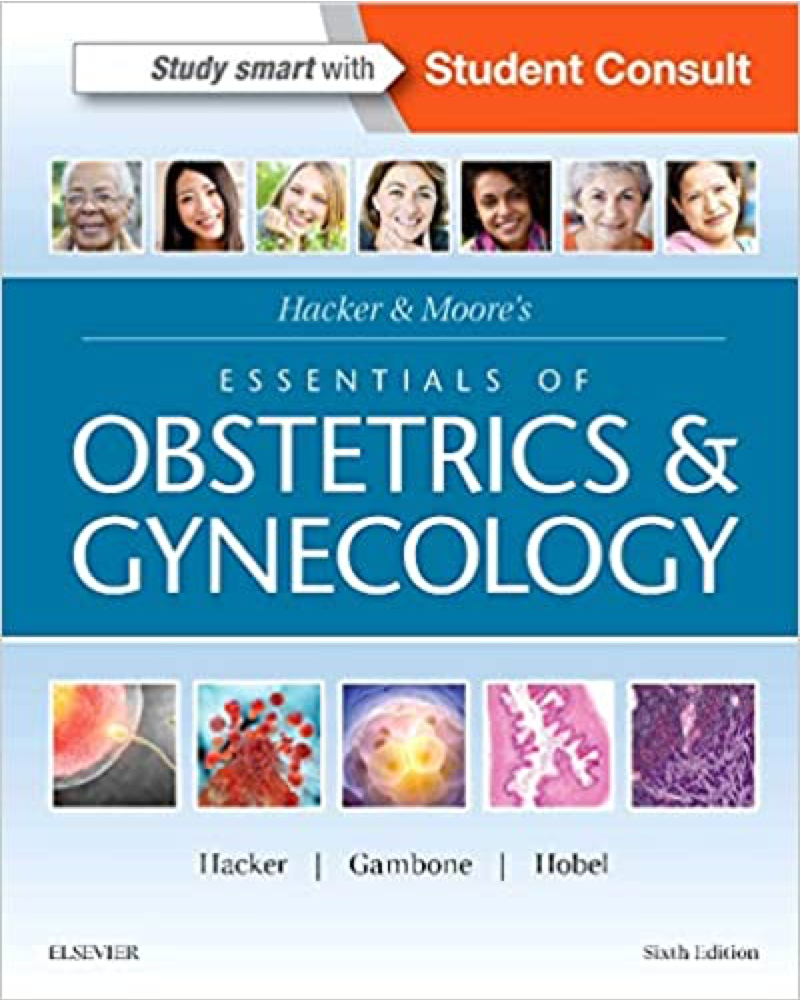
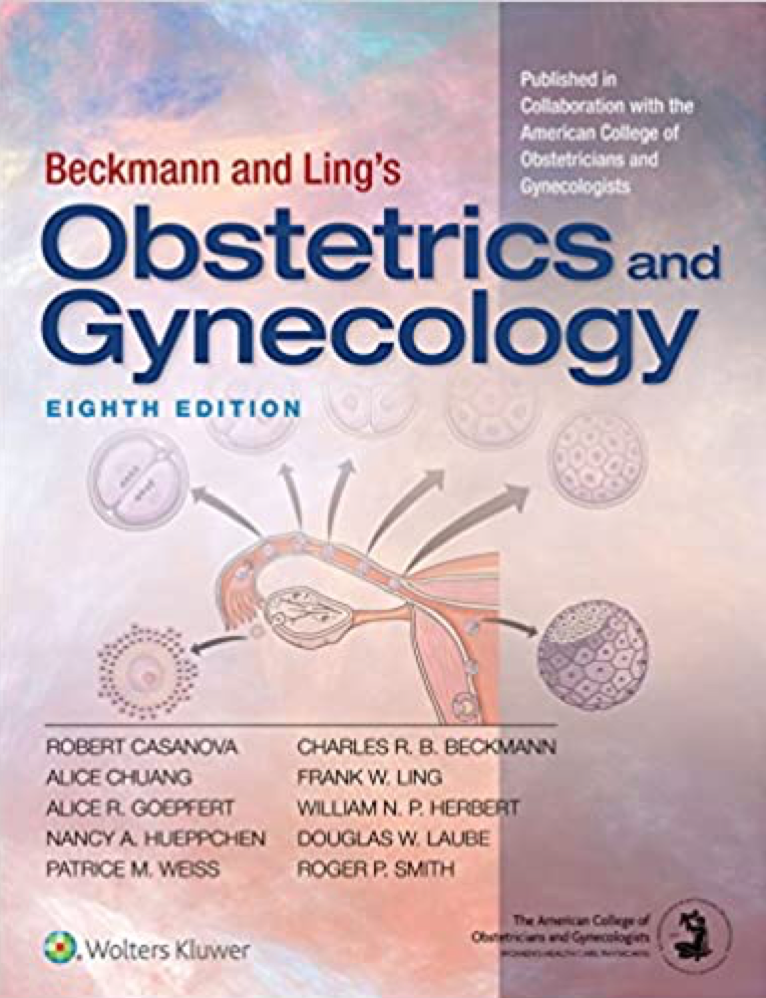
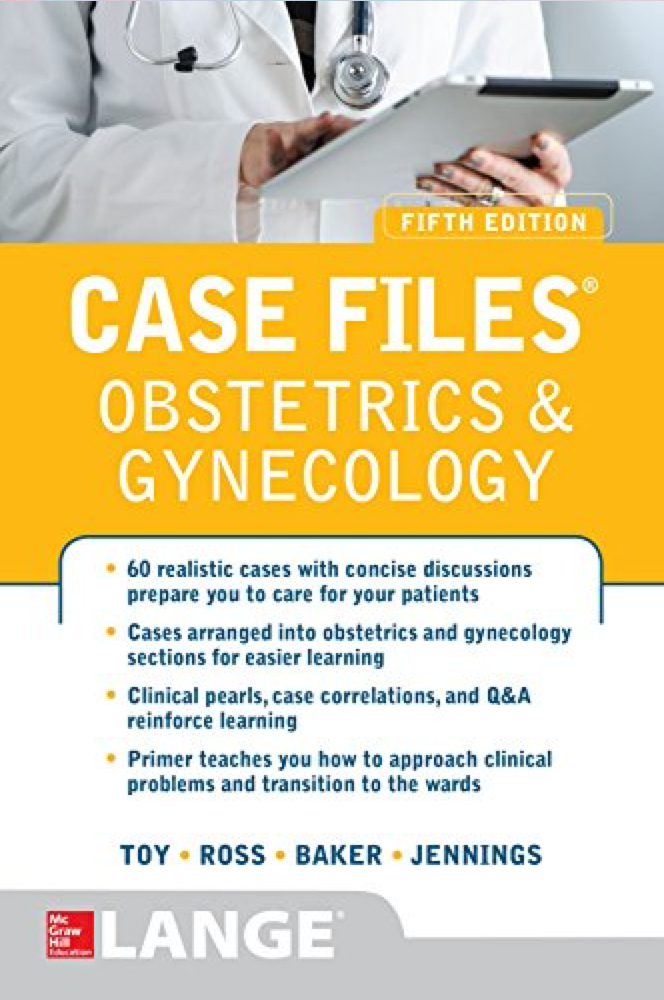
Case Files: Obstetrics & Gynecology was pivotal in my preparation! The cases are high-yield with good explanations and generally pretty good questions.
I liked SOAP for Obstetrics and Gynecologyfor the wards. It’s a handy reference that tells you the questions to ask, physical exam findings, and how to construct an assessment and plan for ~100 different common conditions.
ACOG Practice Bulletins are good sources to read up on specific topics for the wards.
Q-banks: UWorld, UWise (APGO’s Q-bank, provided to students by many med schools)
Podcasts/Videos
The best podcast is Dr. Tonya Wright’s The OBG Med Student (Apple). Dr. Wright is the clerkship director at Penn State’s med school, and she recorded twenty-six 10-20 minute episodes with residents and faculty members from Penn State Hershey Medical Center. Each episode uses a great case-based Q&A back-and-forth format that is interesting and engaging. This podcast is specifically focused on APGO learning objectives that are frequently tested on the SHELF exam. It is specifically made for med students. Give it a listen!
Online MedEd is well-received, but I didn’t use it much.
APGO (Association of Professors of Gynecology and Obstetrics) has produced a library of over 50 short (5-10 min) animated YouTube videos about high-yield medical student learning objectives. They’re pretty engaging and well done. Fire up Brave Browser (so you don’t have to watch ads and can earn some crypto) and tune in: https://www.youtube.com/playlist?list=PLy35JKgvOASnHHXni4mjXX9kwVA_YMDpq
The OB/Gyn Podcast is a bit too long-winded and historical in my opinion, but might be good if you have a long car ride and want something to listen to: http://www.obgyn.fm/.
Mnemonics/Concepts
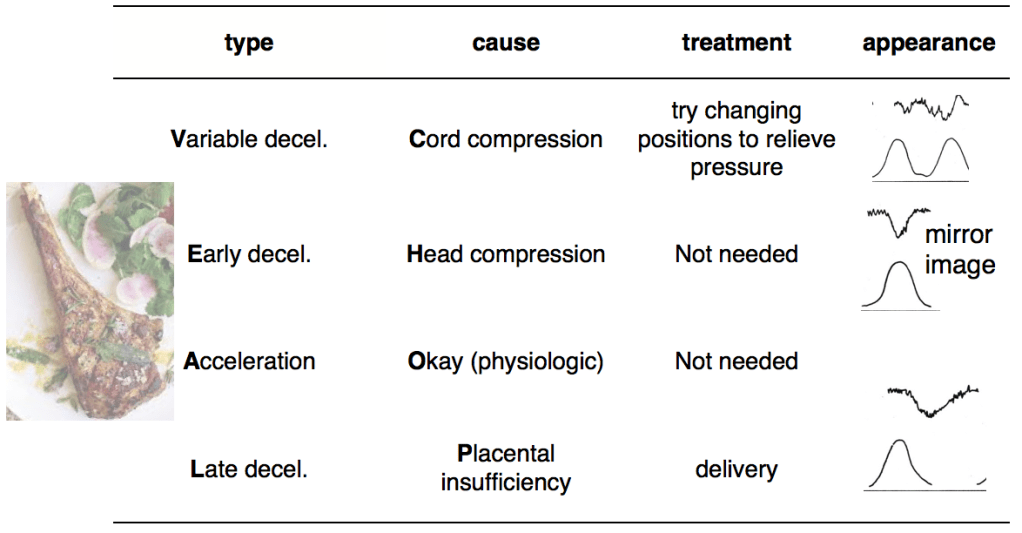
“VEAL CHOP” was a good way to remember fetal heart tracings. This is part of fetal heart monitoring to measure fetal distress. You look at the fetal heart rate (top trace) and uterine pressure (bottom) in these traces.
One of my attendings broke down hypertension in pregnancy like this:
Lastly, for maternal-fetal physiology, remember:
Most stuff goes up like 30%
Everything goes up even more if there are twins, triplets, etc (multiple gestation)
Blood plasma volume goes up even more than Hgb, often leading to a dilutional anemia picture (even though the total RBC mass is up).
Skills to know/learn
OR: know how to:
Get your gloves up, scrub, get bed in/out of room at beginning/end of case, help roll patient to/from bed to table
Skills:
putting in/taking out Foley catheter,
suturing,
knot-tying
generally two-hand or one-hand; instrument tying isn’t as common.
The French knot is used to close large skin incisions (e.g., after C-sections), which is able to be buried under the skin, but you probably won’t be expected to learn that one even though it’s easy.
Nice, concise history
All OB patients should be asked the four questions — vaginal bleeding, loss of fluids, contractions, and have you felt the baby move? (note quickening is ~20 wks for primigravida and a few weeks earlier for multips).



 Med School Beast