How to study for your medical microbiology course

Microbiology is typically one of the hardest courses in medical school. There are dozens of drugs to learn and hundreds of bugs, along with lots of molecular details, lab tests, and host-pathogen interactions. At least at my medical school, it was on par with—if not harder than—anatomy. That said, it’s a rewarding course that pays dividends for the boards (it’s high-yield), and—more importantly—lays down foundational knowledge for all fields of medicine.

The human mind is a pisspoor tool for memorizing lists of facts. On the other hand, it is unbelievably good at taking in visual details laid out in a scene, and is excellent at remembering engaging stories. While older microbiology texts lay out the information in lists of facts, newer resources take advantage of the powers of human memory to grok information from visuals and stories. I’m going to cover three microbiology resources that reflect this approach, and I highly recommend that you use them.

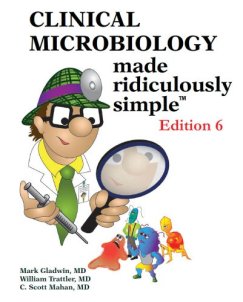
  1. In microbiology, one of the first books to take the more modern approach was Clinical Microbiology Made Ridiculously Simple. This book is the absolute best of this generally good series. It uses stupid mnemonics, dumb jokes, and unforgettable cartoons to break down what you need to know. Although it’s dated, it’s still one of the best books you can buy to supplement your medical school education. Bread-and-butter microbiology hasn’t exactly changed all that much since it was written, and the authors have done a good job updating it with new editions to reflect the changing state of clinical knowledge.
    51CuEqqKBhL.jpg
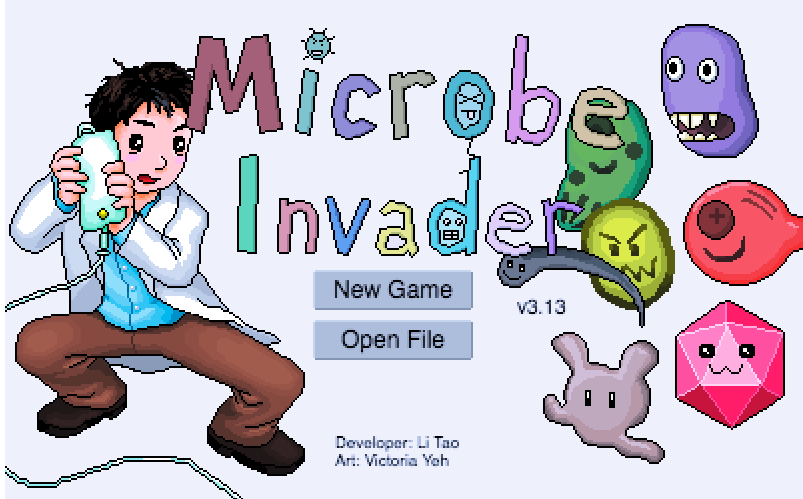
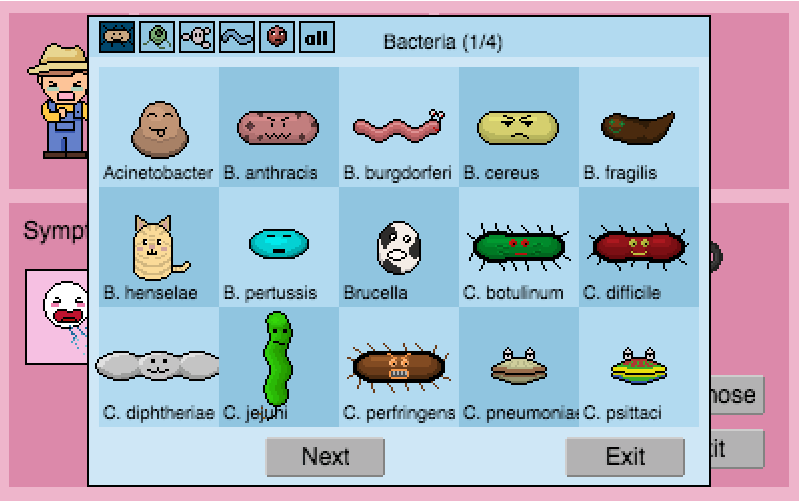
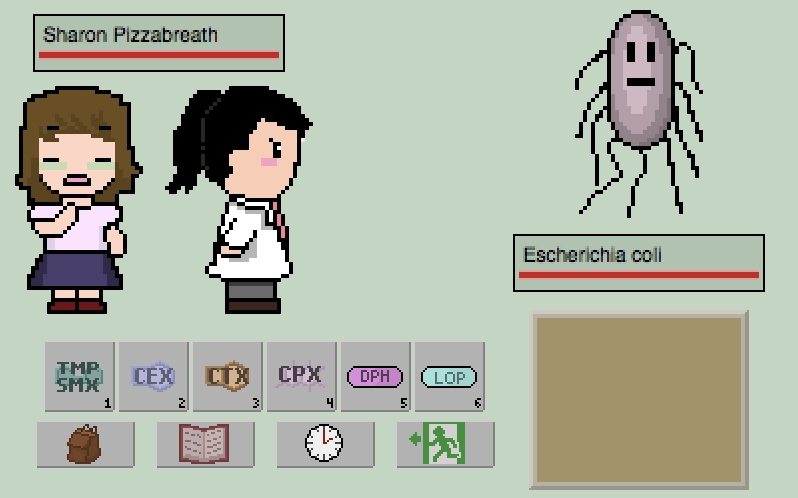
  2. Did you enjoy playing Pokémon growing up? Microbe Invader is just what the doctor ordered. This online game lets you stock on antibiotics, diagnose infections in patients with funny names, then battle the bacteria, viruses, and fungi! By putting you in charge (and using memorable—though outdated—graphics), Microbe Invader makes microbiology much more memorable and engaging than book learning alone. I played Microbe Invader during study breaks, looking up diagnostic tests and antibiotic susceptibilities as needed and taking a few notes to help me learn the forgettable ones. I found I got more out of the game as the course went on.Screen Shot 2018-02-20 at 11.38.33 PM.png
    Screen Shot 2018-02-20 at 3.33.54 AM.png
    battle.png
  3. The most modern of the three, Sketchy Micro, brings the material to life with vivid images replete with memorable recurring symbols and dumb mnemonics. Like the age-old “memory palace” technique, Sketchy Micro organizes the information into clear symbols that pop up one-at-a time in memorable scenes. Dumb jokes keep it lighthearted and reasonably entertaining. The 5- to 15-minute video length (with the option to play them back at increased speed) packages the information into tasty morsels. Personally, I only used Sketchy Micro when it was time to study for the boards, but many of my classmates used it during the course and found it very helpful.Sketchy Micro is now part of the larger Sketchy Medical collection, which also includes Sketchy Pharm and Sketchy Path. I found Sketchy Micro more helpful than Pharm, though. The Pharm videos often get quite long and the symbolism is necessarily more convoluted, but they often explain organ physiology quite well (e.g., the nephron) and tie in the pharm. I haven’t tried Sketchy Path as I’m an old man and these videos emerged after my time in preclinical med school, though it may be worth checking out. Path is already quite saturated, however, with excellent contributions from Drs. Goljan and Sattar (Pathoma). Though these courses are relatively expensive, they are certainly worth it for the boards and may make a sensible investment during the course as well.IMG_3322.jpeg

Despite the large volume of information, if you start early and study Clinical Micro MRS and Sketchy Micro hard and crush Microbe Invader on the side, you will be in a good position to slay the test. Further, you will set yourself up for a strong performance on the boards and you will serve your future patients well.

Making random rare diseases memorable with the YouTube School of Medicine

The human mind is well-suited to remembering stories, but awful for remembering long lists of facts with no emotional import. In particular, the human mind remembers where items in a place or image are located extremely well, particularly if what’s in the picture has a strong emotional impact.* This fundamental property of the human mind makes a lot of traditional sources used in medical school dreadful for learning the material; case-based learning is much better. Additionally, this is the reason why Sketchy Micro is so useful.

When you’re wading through a long, boring list of conditions in First Aid and you can’t remember one of them, give yourself a story to pin the disease onto. Head over to YouTube and type in the name of the disease. Try to find a ~5 minute video with a patient talking about it, and crank that sucker up to 1.5x or 2x speed. Stay away from any videos that are meant to be USMLE review. Ironically, you’re much better off with a hard-hitting story about a patient and their family as opposed to another boring list of facts about the disease, and a lot of the USMLE reviews out there are very poorly-presented lists of facts. Here are a few examples of good videos to watch:

The only educational video that’s worth watching is this absolutely absurd 1 minute video on Peutz-Jeghers Syndrome and also this clever set of mnemonics for lysosomal storage disorders from a med student studying for the boards.

(H/t to my classmate G for this tip).

* Joshua Fore’s Moonwalking with Einstein offers an entertaining take on how competitive “mental athletes” use techniques like “the memory palace” that leverage this principle; Sketchy Medical and Picmonic basically use this technique.


How to study an organ block in medical school

The most sensible way to organize your studying is by organ block/subject. Studying an organ block should take 2-5 days usually, depending on how good you are with it and how high-yield it is (exception: you can spend significantly less time on biostatistics). Let’s break down how to study for an organ block:

  1. First Aid Overview—Skim through chapter in First Aid so you know what’s important (<30 min), Sakura Pigma pen in hand. Circle concepts that you don’t know very well.
  2. Anatomy—Cover the key anatomy quickly. I recommend going through the relevant chapter in Clinical Anatomy Made Ridiculously Simple (note: this is not sufficient for neuroanatomy; I will write a post about how to study for neuro soon). If there’s any anatomical drawings in First Aid, copy them into your notebook if you need a refresher. I tended not to use Netter’s much.
  3. Physiology—(especially important for renal)—I recommend BRS Physiology by my girl Linda Costanza. This is a shorter outline form of her Physiology textbook. I went through a few chapters in the longer-length textbook for big, high-yield organ systems where I needed it (e.g., Cardio), but it’s simply too long to go through the whole thing.
  4. Studying the organ block in-depth—Next, you’re going to want to get a meatier overview of the organ system that covers the high yield physiology, path, pharm, etc. This is where you want to bust out the greatest Step 1 book no one knows about, Crush Step 1 (post coming soon). Go through it carefully. Take notes all over it with your Sakura Pigma pens, and take notes in a notebook as well. I recommend you also go through the (short) chapter in Clinical Pathophysiology Made Ridiculously Simple if you have time. Just underline in the book; no need to take a ton of notes on it.
  5. Hit the pathology and pharm—Made sure you’re listening to my man Goljan. If you have time, you can also listen to the Pathoma lectures. Go through the Pathoma book carefully, underlining and taking notes in the margins with your Sakura Pigma pens, and watch the videos at least once, pausing to take notes or look at a table from the book as needed. For pharm, take a look at the drugs in First Aid. For most organ blocks, you’re not going to want to learn them out of First Aid though, so go through Crush Step 1 carefully to get the drugs you need. Sketchy Pharm was just coming out last year when I was studying; I recommend it if you have time, though Sketchy Micro is a lot better than Sketchy Pharm.
  6. Q-Banks and CasesToward the end of the study period, it’s time to start crushing UWorld questions (post coming soon). I always used Tutor mode, usually in blocks of 10 or 15 questions at a time. Also, I recommend going through First Aid Cases for the USMLE Step 1. If you have time, USMLE Step 1 Secrets is good for case-based learning, but it’s pretty lengthy, so I wouldn’t use it unless you really like cases.

There’s your general outline for studying an organ block. Stay tuned for posts about specific organ blocks and how to tackle them.

Audio Learning for Step 1

The beauty of listening to audio to study for the boards is that it unlocks several hours of “studying time” previously unavailable to you. Your mileage may vary though, as you must be a good auditory learner for this to work.

Personally, I listened while…

  • Walking
  • Doing dishes or other chores around the house
  • Getting dressed
  • Working out

This allowed me to reclaim at least an hour every day of lost time and use it for studying. I found listening while walking a familiar route to be the most memorable, as I found myself associating certain facts with certain locations on my route, making it easier to remember them.

I recommend downloading a bunch of podcasts on your phone or iPod, getting a good pair of headphones with a “remote” button on the wire that lets you play and pause the music, and listening at 1.6x speed or so.

I used the following sources:

  • Pathoma audio. Some say that you can scour the underpants of the internet to find it. Pathoma is certainly worth buying, however, as the book and the video lectures are essential for boards studying.
  • Goljan audio. Ed Goljan, MD (a.k.a. Poppie) is a hilarious hematopathologist who is straight out of Brooklyn. Several years ago, he gave a series of boards review lectures to an international audience. Someone recorded them, and they are available for download at the following link: Goljan Lectures.* Here’s a backup. Goljan does a good job at complementing Pathoma and focusing on a few slightly different topics. He also blends in more material about clinical management. Additionally, whereas Sattar is “just the facts, ma’am” in Pathoma (aside from a few mnemonics), Goljan’s podcast is chock full of funny anecdotes and mnemonics, making it quite entertaining. You’ll hear tons of stories about his grandkids, and about crapping on someone’s lawn during a marathon race, among other old yarns. Though the material is becoming a bit dated, the fundamentals don’t change, and Goljan is a master teacher.

    mqdefault.jpg
    “Swolljan” about to school an overconfident student in arm wrestling.
  • Audio from your school. If you have podcasts available, use them! I downloaded several from mine; I will look into the copyright situation to see if I can make them available here.

Enjoy the extra hours you now have to study thanks to audio learning!

*I found this link thanks to shortwhitecoats.com, which hasn’t been updated since 2015 but has a lot of good articles to help you choose a speciality.

How ignoring First Aid helped me get a great Step 1 score (the “Screw First Aid” study plan)

The “Screw First Aid” Step 1 Study plan

What is the role of First Aid when you’re prepping for the boards?  While First Aid is essential for your preparation, it is merely a list of facts you should know for the boards.  That’s it.  Don’t spend your days poring over it.  Consider it a guide that tells you what you should know.  It can also serve in a limited capacity as a review book and occasionally provides a helpful mnemonic for learning something.  Since it is a review book, you cannot expect it to teach you anything effectively.  Consequently, here’s how to get the most out of First Aid:

During MS1 and MS2, consider skimming the relevant portion of First Aid during each course.  It should take you <30 minutes.  This will orient you to what’s important to know for the boards during your courses.  It’s not a big deal if you forget to do this; I only did it for a few courses and still did well.  A 2-year-old old edition will suffice for this purpose

During your step 1 study period:

  • Have the FedEx store hole punch your copy of the latest edition.  Then buy a three-ring binder and stick it in there.  Also, buy one of those folders that has three prongs in the middle.  Store the chapter of First Aid you’re currently studying in that folder; now you can bring it everywhere.
  • By the Sakura Pigma pens in a few colors.  These are great for writing on the glossy paper used in First Aid and in the GREATEST STEP 1 PREP BOOK THAT NO ONE’S HEARD OF (post coming soon). You can buy them from Amazon or Blick.
  • Skim the relevant chapter of First Aid before you start reviewing each subject.  Take notes/underline quickly if you like.  Spend <30 minutes on this.
  • At the end of your review of each subject, go back through First Aid, underlining/highlighting/taking notes more thoroughly.  Make sure you know what’s in there; otherwise, stop and look up what you’re missing. Make a flash card if there’s something you can’t seem to remember.  Spend about an hour (up to 2 for long chapters) on this.
  • Use the rapid review/high-yield associations at the back of the book in the final few days.

You need to remember that First Aid doesn’t really teach you any concepts, nor does it contain all of the information you need to know to slay the boards.  While it’s important, don’t over-emphasize First Aid and don’t spend more than a few hours per block total on it.